7 Best AI Personal Assistants in 2026: Transform Your Life with Top Picks
Artificial intelligence has fundamentally changed how we handle everyday tasks. In 2026, AI personal assistants are no longer just voice-activated tools that set timers or play music. They've evolved into sophisticated digital partners that help manage calendars, organize work, control smart homes, and even provide emotional support when needed most.
With so many options available, choosing the right one can feel overwhelming. That's why we've put together this comprehensive guide to the best AI personal assistants of 2026. Whether you're a busy professional looking to boost productivity, a home automation enthusiast, or someone who wants a digital companion to simplify daily life, there's an AI assistant tailored to your needs.
Let's explore the top AI personal assistants making waves this year and help you find the perfect match for your lifestyle.
What Makes the Best AI Personal Assistant?
Before diving into our top picks, it's important to understand what separates a good AI assistant from a great one. Here are the key features to consider when choosing your digital companion:
Natural Language Processing
The best AI assistants understand context, nuance, and even casual conversation. They don't just respond to commands—they engage in meaningful dialogues. Look for assistants that grasp implied meaning and follow complex, multi-part requests without getting confused.
Ecosystem Integration
Your AI assistant should play well with your existing devices and apps. Whether you're deeply invested in Google's ecosystem, Apple's services, or Amazon's smart home platform, choose an assistant that integrates seamlessly with what you use daily.
Voice Recognition Accuracy
Nothing is more frustrating than repeating yourself multiple times. Top-tier assistants recognize various accents, handle background noise well, and understand you even when you speak naturally without carefully pronouncing each word.
Customization and Learning
The best assistants adapt to your preferences over time. They learn your schedule, remember your priorities, and anticipate your needs based on past interactions. This personalized approach makes them genuinely useful rather than just another tech gadget.
Privacy and Security
Since AI assistants handle sensitive information—your calendar, contacts, emails, and sometimes even smart home controls—robust security isn't optional. Look for assistants that offer clear data controls, encryption options, and transparent privacy policies.
Top 7 Best AI Personal Assistants in 2026
After testing dozens of options in real-world scenarios, these seven assistants stood out from the crowd. Each brings something unique to the table, so let's break down what makes each one special.
1. Saner.AI – Best for Productivity and Task Management
Saner.AI has quickly become a favorite for professionals who need help organizing their digital lives. What sets it apart is its ability to connect notes, tasks, and research into a unified knowledge system.
Key Features:
- Neural note-taking: Automatically captures and organizes information from your browsing, reading, and meetings
- Task management: Breaks down complex projects into manageable steps with smart reminders
- Research assistance: Summarizes articles, extracts key points, and helps you synthesize information
- Cross-platform sync: Works seamlessly across desktop and mobile devices
Who it's for: Professionals, researchers, and anyone who deals with large amounts of information daily.
Pricing: Free tier available; premium plans start at $9.99/month
The strength of Saner.AI lies in its ability to reduce information overload. Instead of juggling multiple apps for notes, tasks, and research, you get one cohesive system that learns how you work and organizes things the way you think.
2. ChatGPT – Best for Versatile Conversations
OpenAI's ChatGPT has become synonymous with AI conversation. Its latest versions offer incredibly natural dialogue, making it feel like chatting with a knowledgeable friend who happens to have access to vast amounts of information.
Key Features:
- Natural conversation: Engages in flowing dialogue without feeling robotic
- Wide knowledge base: Can discuss almost any topic with reasonable accuracy
- Custom instructions: Remembers your preferences across sessions
- Plugin ecosystem: Extends functionality with third-party integrations
Who it's for: Anyone who wants a versatile AI companion for learning, writing help, brainstorming, or casual conversation.
Pricing: Free version available; Plus plan at $20/month
ChatGPT excels at being genuinely useful across so many contexts—from helping you write a difficult email to explaining complex concepts in simple terms. Its conversational nature makes it feel more human than many competitors.
3. Pi – Best for Emotional Support and Companionship
Pi, developed by Inflection AI, takes a different approach. While other assistants focus on productivity, Pi prioritizes being a supportive conversational partner who actually listens.
Key Features:
- Empathetic responses: Designed to acknowledge feelings and provide supportive dialogue
- Conversational depth: Remembers context within conversations for more meaningful exchanges
- Voice mode: Offers voice interactions for a more personal experience
- No judgment: Created for open, judgment-free conversations
Who it's for: People who want more than a utility—they want an AI that feels like it cares.
Pricing: Free with premium options
What makes Pi special is its focus on emotional intelligence. It's not trying to be the smartest assistant—it's trying to be the most understanding. For many users, this fills a genuine need for a non-judgmental space to think through ideas or just have someone to talk to.
4. Google Assistant – Best for Integration with Google Services
If you live in Google's ecosystem, Google Assistant remains the most natural choice. It seamlessly connects with Gmail, Google Calendar, Google Maps, and the entire suite of Google services.
Key Features:
- Smart home control: Works with thousands of smart devices
- Routine automation: Execute complex multi-step actions with single commands
- Proactive suggestions: Offers relevant reminders before you even ask
- Multilingual support: Handles multiple languages in the same conversation
Who it's for: Android users and anyone heavily invested in Google's ecosystem.
Pricing: Free
Google Assistant shines through convenience. If you already use Google Calendar, Google Maps, and Google Home devices, adding Assistant feels like the final piece that ties everything together. Its ability to pull information from your personal data makes it uniquely helpful.
5. Amazon Alexa – Best for Smart Home Automation
Amazon's Alexa continues to dominate the smart home space. With the largest ecosystem of compatible devices, it's the go-to choice for building a truly connected home.
Key Features:
- Massive skill library: Over 100,000 skills from third-party developers
- Smart home hub: Built-in support for Matter, Zigbee, and other protocols
- Voice shopping: Order products hands-free with voice commands
- Routines: Automate multiple actions based on triggers like time or location
Who it's for: Smart home enthusiasts who want the most compatible assistant for their devices.
Pricing: Free on Echo devices; Alexa Guard+ at $5.99/month for advanced features
Alexa works best when you have multiple smart devices. A simple "Good morning" command can adjust your thermostat, turn on the lights, start your coffee maker, and give you the weather forecast—all without lifting a finger.
6. Microsoft Copilot – Best for Productivity in Microsoft Ecosystems
Formerly known as Cortana, Microsoft Copilot has transformed into a powerful productivity assistant deeply integrated with Microsoft 365. If your work revolves around Office apps, this is your best choice.
Key Features:
- Office integration: Works natively with Word, Excel, PowerPoint, and Outlook
- Meeting assistance: Summarizes meetings, drafts follow-up emails, and prepares briefs
- Writing enhancement: Helps polish emails, documents, and presentations
- Enterprise security: Built with business-grade data protection
Who it's for: Business professionals who live in Microsoft 365.
Pricing: Included with Microsoft 365 subscriptions (starting at $5/month)
Copilot truly shines in work contexts. It can summarize long email threads, help you analyze data in Excel, or transform your rough notes into polished presentations. For productivity-focused users, this integration saves significant time.
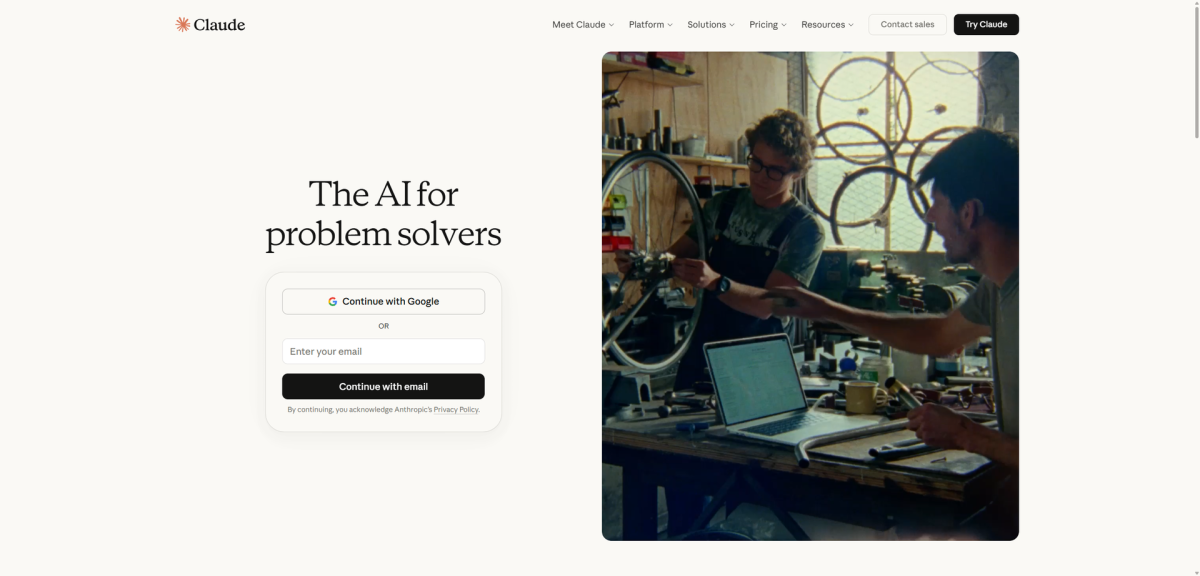
7. Claude – Best for Advanced Conversational Assistance
Anthropic's Claude stands out for its thoughtful, nuanced responses. It's designed to be helpful while maintaining strong ethical guidelines and avoiding harmful outputs.
Key Features:
- Extended context: Can handle very long conversations and documents
- Careful reasoning: Provides well-thought-out responses rather than quick guesses
- Code assistance: Excellent for developers needing coding help
- Safety focus: Built with strong guidelines to avoid problematic outputs
Who it's for: Professionals who need thoughtful assistance, especially in technical or creative fields.
Pricing: Free tier available; Pro plan at $20/month
Claude feels different from other assistants—less flashy, more considered. If you need an AI that takes the time to understand nuance and provide genuinely thoughtful responses, particularly for complex tasks, Claude delivers.
How to Choose the Best AI Personal Assistant for Your Needs
With so many excellent options, how do you pick the right one? Here's a practical framework to guide your decision:
Consider Your Primary Use Case
Start by identifying what matters most to you:
- Productivity and organization? Saner.AI or Microsoft Copilot
- Smart home control? Amazon Alexa or Google Assistant
- Creative work and brainstorming? ChatGPT or Claude
- Emotional support and companionship? Pi
Evaluate Your Current Ecosystem
The best assistant is one that works with what you already use:
- Google user? Google Assistant makes the most sense
- Microsoft 365 user? Copilot integrates seamlessly
- Apple enthusiast? Siri (though it lags behind competitors)
- Smart home builder? Alexa has the most device compatibility
Think About Privacy
Different assistants have different privacy approaches:
- Some offer extensive data controls and on-device processing
- Others rely more on cloud processing but offer more features
- Consider what data you're comfortable sharing
Test Before Committing
Most assistants offer free versions or trials. Take advantage of these:
- Spend a week using each assistant for real tasks
- Notice where you get frustrated
- Pay attention to what feels natural versus forced
Start Small
Don't try to use every feature at once. Pick one core function—maybe calendar management or smart home control—and master it before expanding.
The Future of AI Personal Assistants
The AI assistant landscape continues evolving rapidly. Here's what we see shaping the coming years:
Improved Contextual Understanding
Future assistants will remember more about you—your preferences, your goals, your relationships—and use that knowledge to provide increasingly relevant assistance. They'll understand context across weeks and months, not just within individual conversations.
Deeper Personalization
Instead of one-size-fits-all responses, assistants will adapt their communication style, suggest actions based on your unique patterns, and anticipate needs before you articulate them.
Better Multimodal Interaction
The ability to seamlessly switch between voice, text, and visual interfaces will improve. You'll start a conversation on your phone, continue it on your laptop, and have your smart speaker chime in—all without missing a beat.
Enhanced Privacy Options
As concerns grow, expect more assistants to offer sophisticated privacy controls, including local processing options and granular data sharing permissions.
Smarter Home Integration
The vision of a truly intelligent home—where your assistant understands not just individual devices but the relationships between them—is becoming reality. Your home will feel like it anticipates your needs.
Conclusion: Embrace the Best AI Personal Assistant for a Smarter Life
Choosing the right AI personal assistant comes down to understanding your needs and finding the tool that matches them. Whether you prioritize productivity, smart home control, emotional support, or all of the above, there's an assistant on this list that's right for you.
The best AI personal assistant isn't necessarily the most feature-rich—it's the one that fits seamlessly into your life and helps you accomplish what matters to you. Start with one core function, see how it fits, and don't be afraid to switch if your needs evolve.
2026 is an exciting time for AI assistants. The technology has matured enough to be genuinely useful, the ecosystems have grown robust, and there's genuine variety in how different assistants approach the problem of making our digital lives easier.
Take the first step today. Pick one assistant that matches your primary need, try it for a week, and see how it feels. You might be surprised how quickly you wonder how you ever managed without one.
The right AI assistant can transform how you work, live, and interact with technology. Use this guide as your starting point, but trust your own experience to find the perfect match for your unique needs.